What Could Cause My Home to Sell for Less Than It Should?
Insights & Guides
Insights & Guides
Several factors can affect how much a South Florida home ultimately sells for. These are the areas sellers should evaluate before listing to understand how their property may compete in the current market.
A homeowner can spend years building equity and still leave money on the table when it is time to sell.
That does not necessarily mean the home was worth less than expected. In many cases, the outcome is shaped by how the property was positioned against the alternatives buyers could purchase at that particular moment.
That distinction matters in South Florida.
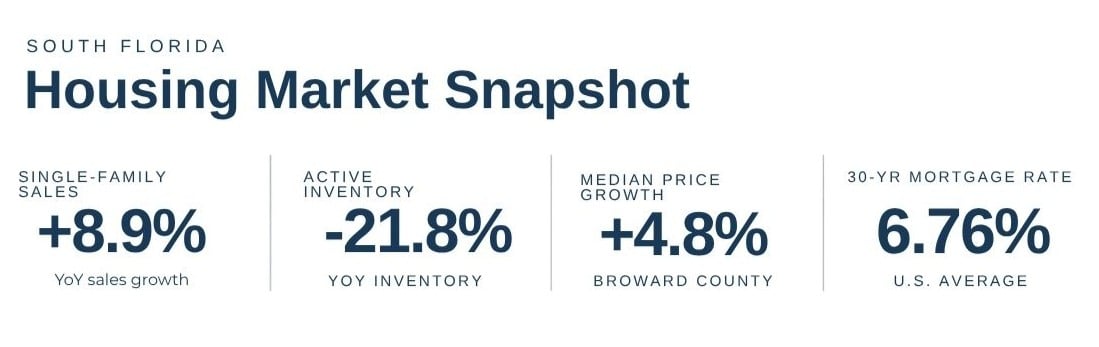
The latest consolidated five-county South Florida report from MIAMI REALTORS® + RWorld used in this analysis covers July 2026 across Miami-Dade, Broward, Palm Beach, Martin, and St. Lucie counties. Year-to-date single-family sales were also 8.9% higher than a year earlier. At the same time, active single-family inventory was 21.8% lower.
Median single-family sale prices increased year over year in all five counties included in the report, ranging from 2.6% in St. Lucie County to 7.6% in Palm Beach County. Broward County was up 4.8%, while Miami-Dade was up 3.8%.
Those numbers create a generally supportive backdrop for single-family homeowners.
They do not tell us what one particular house should sell for.
That is an important distinction we make when evaluating a property. We want to understand the broader market, but the decision eventually becomes much more specific:
What other homes can this buyer purchase, and why would they choose this one?
Price, condition, location, presentation, insurance, financing, improvements, and the quality of the comparable sales can all influence that answer.
So what could cause a South Florida home to sell below the strongest result its market may support?
Usually, it is not one mistake.
It is the way several factors interact.
Source: MIAMI REALTORS® + RWorld, July 2026 • Freddie Mac PMMS, September 10, 2026
South Florida's recent single-family numbers provide useful context before looking at individual selling mistakes.
Single-family closed sales increased 8.9% year over year in July 2026, with gains in every county covered by the regional report. Broward County sales increased 8.0%, Miami-Dade increased 5.6%, Palm Beach increased 12.7%, Martin increased 23.4%, and St. Lucie increased 2.4%.
Year-to-date single-family sales were 8.9% higher than the same period one year earlier. Sales were up in all five counties, including 7.3% in Broward County, 8.9% in Miami-Dade, 11.6% in Palm Beach, 18.2% in Martin, and 3.0% in St. Lucie.
Inventory tightened at the same time. Single-family active inventory was down 21.8% from the previous year.
Taken together, the evidence points to stronger single-family transaction activity and tighter supply than a year earlier.
For sellers, that can improve the backdrop.
But fewer homes for sale does not mean a buyer will overlook a property that is poorly priced, difficult to insure, in weaker condition, or competing against a more compelling alternative.
The market can be favorable and an individual listing can still underperform.
That is why we use regional numbers to understand the environment, then narrow the analysis to the property itself.
One of the clearest ways to weaken a property's market position is to begin at a price current evidence does not support.
Sellers often have legitimate reasons for believing their home deserves a premium.
The lot may be larger.
The kitchen may have been expensive to renovate.
The house may sit on a better section of waterfront.
The owner may have invested hundreds of thousands of dollars in improvements.
A nearby home may have achieved an impressive sale price.
Each of those facts can matter.
None establishes market value by itself.
Even the Federal Housing Finance Agency makes this distinction with its own House Price Calculator. An estimate based on broader market appreciation does not determine the actual value of an individual house. Actual value depends on the local market, condition, age, improvements, and other property-specific factors.
In South Florida, those differences can become significant very quickly.
Two homes with similar square footage may occupy completely different competitive positions if:
Our starting point is therefore not simply, "What number should we put on the listing?"
We first want to know:
"At what price does this property become compelling against the alternatives the likely buyer can purchase?"
That requires looking at closed sales, current competition, pending activity where available, condition, location, improvements, and the characteristics buyers appear willing to reward.
This is where local market experience matters. The numbers give us a starting point, but knowing which differences actually matter to buyers is what helps turn those numbers into a pricing strategy.
Not every nearby sale is a useful comparable.
The best comparable properties resemble the subject home in the characteristics that influence market behavior.
Fannie Mae's appraisal guidance states that comparable sales should have similar physical and legal characteristics to the subject property, including factors such as site, room count, finished area, style, and condition.
The broader principle is useful for sellers even before an appraisal occurs.
Consider two hypothetical South Florida homes.
Home A is 2,000 square feet. It has a recently replaced roof, updated kitchen, renovated bathrooms, newer windows, and a well-maintained exterior.
Home B is also 2,000 square feet. Its roof is older, finishes are dated, and it has deferred maintenance.
If Home A sells for $900,000, that does not automatically make $900,000 the appropriate value for Home B.
The square footage is similar.
The buyer experience is not.
The opposite mistake can also cost a seller money.
A distinctive home can be undervalued when the analysis relies too heavily on properties that are inferior in condition, lot, water access, privacy, renovation quality, construction, or another characteristic buyers value.
This is why we do not treat a comparative market analysis as a simple price-per-square-foot exercise.
The difficult part is deciding which differences deserve weight.
That is where experience with the local market becomes important. A comparable is not useful simply because it is nearby. It has to help explain how buyers are likely to view the property being sold.
Closed sales tell us what buyers paid.
Active listings tell us what buyers can choose today.
Both matter.
South Florida currently has considerably less single-family inventory than it did one year ago.
But an individual seller is not competing against every single-family home in South Florida.
The actual competition may consist of only a small group of properties sharing the same buyer pool.
That competitive set may be defined by:
Suppose regional inventory is falling, but six closely comparable renovated homes are available within a seller's immediate market.
That seller still faces meaningful competition.
This is one reason we pay close attention to listings that buyers are likely to visit before or after seeing the subject property. Those are the homes setting expectations in real time.
A countywide median cannot tell us which one a buyer will prefer.
The seller's real competition is not the entire market. It is the group of properties competing for the same buyer.
Condition affects both value and marketability.
That does not mean every house needs to be completely renovated before it reaches the market.
In our experience, the more useful question is:
Which issues are likely to change the buyer's decision?
A roof approaching the end of its useful life deserves different attention from dated cabinet hardware.
Evidence of water intrusion creates a different conversation from an older but functional guest bathroom.
An exterior that appears neglected can shape the buyer's perception before the front door opens.
Fannie Mae's appraisal guidance similarly recognizes that condition, quality, systems, design, and other property characteristics can create market resistance and affect marketability.
The objective before listing is therefore not to make every house perfect.
It is to identify the items that may cause buyers to:
Sometimes correcting the issue makes sense.
Sometimes documenting it is enough.
Sometimes the right decision is to price with it in mind.
The answer depends on the property.
Our role is to help the seller separate improvements that genuinely strengthen the home's market position from work that may simply add cost without changing the buyer's decision.
Homeowners understandably remember what they paid for their improvements.
Buyers do not price those improvements according to the seller's invoices.
The 2025 National Association of REALTORS® and National Association of the Remodeling Industry Remodeling Impact Report illustrates the difference. The report estimated cost recovery at 100% for a new steel front door, 83% for a closet renovation, 80% for a fiberglass front door, 60% for a complete kitchen renovation, and 50% for a bathroom renovation.
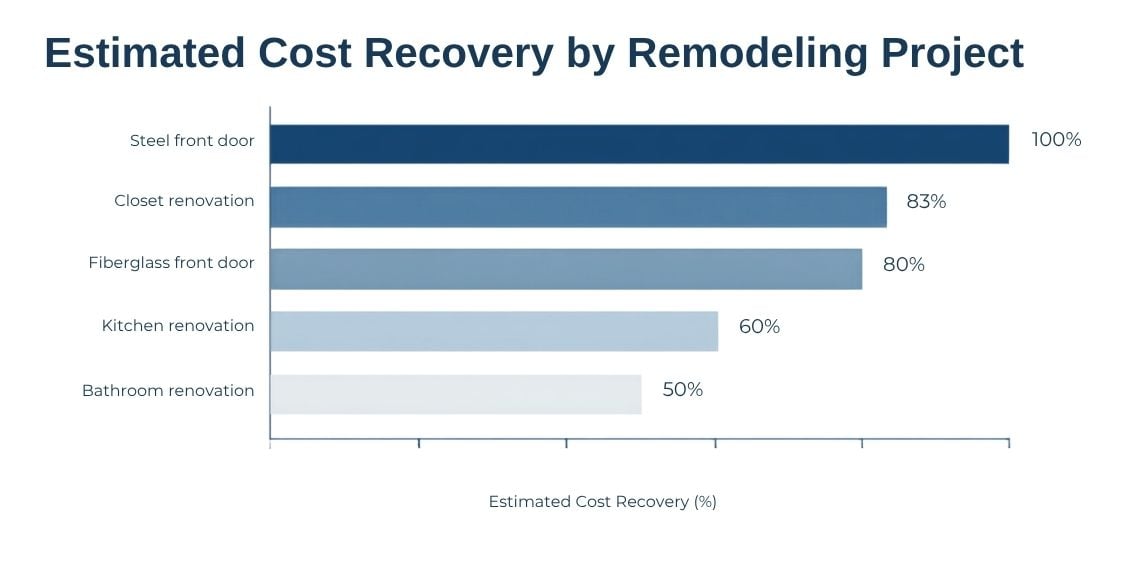
Those are national estimates, not promises of what a South Florida seller will recover.
The larger principle is more important:
What an improvement costs and what it contributes to resale value are not necessarily the same number.
A $100,000 kitchen does not automatically make a property worth $100,000 more.
The kitchen may be exactly what differentiates the home from nearby competition.
It may contribute only part of its cost.
It may make the property considerably easier to sell without producing an equivalent dollar increase.
Or it may reflect a highly personal design choice that the eventual buyer values differently.
Before a seller invests heavily in renovations specifically for resale, we would rather evaluate what buyers in that property's competitive set are already rewarding.
The question becomes:
Will this improvement materially strengthen the property's position against the homes buyers can choose instead?
That is a much more useful question than simply asking what percentage of the renovation cost might be recovered.
South Florida sellers also need to think beyond visible condition.
Insurance can influence affordability, financing, and buyer confidence.
Florida's Department of Financial Services explains that insurers may evaluate factors including a home's construction, age, roof age and construction, location, use, square footage, wind-mitigation characteristics, claims history, and prior insurance when underwriting a homeowners policy.
Insurers may also request property inspections. For older homes, that can include reviews of the roof, plumbing, electrical system, and heating or air-conditioning systems.
The important seller takeaway is that two similarly priced homes can create different ownership questions for a buyer.
If one appears easier to insure and the other creates uncertainty about eligibility or cost, that distinction can become part of the buyer's decision.
Other issues can create similar resistance:
We prefer to identify these issues before the market identifies them for us.
That gives the homeowner time to decide whether the best response is to correct the issue, document it, disclose it appropriately, or factor it into positioning.
That preparation can be especially important in South Florida, where property condition and insurance considerations can become part of the buyer's financial equation.
7. The Listing Develops a Long Marketing History
Days on market need context.
A distinctive luxury home with a small potential buyer pool may reasonably require more time than a mainstream property in a highly active price range.
So a long marketing period by itself does not prove that something is wrong.
The comparison matters.
If similar homes are repeatedly going under contract while one property remains available, the market is providing information.
The seller should ask why.
Potential explanations include:
Patience can be the right strategy when the seller has flexibility and the property is unusually difficult to replace.
We have also seen situations where waiting without changing anything simply reinforces the same buyer response.
The distinction comes from understanding what the activity is telling us.
If qualified buyers consistently visit and respond positively but the right offer has not yet emerged, patience may be justified.
If buyers consistently reject the property for the same reason, that feedback deserves attention.
Market time is not just a number. It is information.
Some of the most expensive improvements in a house are barely visible during a showing.
The seller may know that the home has:
The buyer may simply see a finished house.
That information gap matters.
We want buyers to understand what they are evaluating, particularly when meaningful improvements help differentiate the home from its competition.
Useful records can include:
A stack of receipts does not prove a particular market value.
It can, however, give buyers and their advisors more information when evaluating the property.
That becomes especially useful when two homes appear similar online but one has considerably more work completed behind the walls, above the ceiling, or around the exterior.
Good preparation is not just about making a home look better.
It is also about making the value easier to understand.

Automated values have made it easier than ever for homeowners to obtain a quick estimate.
They have not eliminated the need to understand the property.
FHFA explicitly notes that its House Price Calculator does not project the actual value of a particular house. The calculator applies average area appreciation, while the actual property's value still depends on local market conditions, age, condition, improvements, and other individual factors.
The same logic applies to county medians and broad price indexes.
If Broward County's median single-family sale price increases, that does not mean every Broward County house appreciated at the same rate.
A waterfront property may behave differently from an inland home.
A fully renovated property may behave differently from its original-condition neighbor.
A one-acre estate and a standard subdivision home are not interchangeable because they happen to sit within the same ZIP code.
Automated estimates and market indexes can help establish context.
They should not replace property-specific analysis.
When we evaluate a home, we want to understand not just what the data says about the area, but how that particular property fits within the market buyers are actually seeing.
The seller controls the asking price.
The buyer still has to afford it.
Freddie Mac's Primary Mortgage Market Survey reported that the average U.S. 30-year fixed mortgage rate was 6.95% as of September 17, 2026, up from 6.76% the previous week and 6.26% one year earlier. The average 15-year fixed rate was 6.26%.
Those are national averages, not the rate an individual South Florida buyer will receive. Rates can vary based on credit, loan structure, down payment, lender, and other circumstances.
But the underlying relationship matters.
Higher borrowing costs increase the monthly payment associated with the same purchase price.
A buyer can love a house and still have a firm ceiling on the payment.
That matters even in the luxury market. Some luxury transactions are cash purchases, but many are financed, and buyers often evaluate the economics of financing even when they have substantial liquidity.
Strong demand therefore does not create unlimited pricing power.
These issues often compound.
Imagine a seller who begins too high because the valuation relies on weak comparable sales.
Showing activity is slower than expected.
Nearby competition goes under contract.
The home accumulates market time.
The seller eventually reduces the price, but buyers now approach the listing differently because they can see its history.
Now consider another home with similar underlying value.
Its pricing is established against the actual competitive set. Significant condition issues are identified before launch. Improvements are documented. Presentation makes the home's strongest characteristics immediately understandable.
The two homes can produce very different selling experiences even during the same market.
That is why "What should my house sell for?" is not always the most useful question.
There is rarely one perfect number existing independently of the market.
There is a range of potential outcomes influenced by the home itself, the available competition, buyer demand, financing, insurance, timing, presentation, and negotiation.
Our job when preparing a home for sale is to understand those relationships early enough that the seller still has choices.
That is where experience matters.
A strong pricing strategy is not simply about finding a number. It is about understanding what supports that number, how the property compares with its alternatives, what objections buyers may have, and how much flexibility the seller has to respond once the property reaches the market.
Even within single-family housing, South Florida is not one market.
The July regional data illustrates that point.
Single-family sales increased year over year by:
Single-family median prices also increased at different rates across all five counties.
The differences become even more pronounced as the analysis gets more local.
A waterfront home in Pompano Beach does not necessarily compete with an inland Pompano Beach house of similar size.
A Coral Ridge golf-course property can attract a different buyer from another Fort Lauderdale home at the same price.
A renovated Imperial Point residence may compete differently from an original-condition property nearby.
A Davie estate on a substantial lot occupies a different market position from a similar-sized house on a conventional subdivision lot.
This is one of the recurring themes we see in our transactions: the closer the analysis gets to the actual property and its likely buyer, the more useful it becomes.
Broad numbers tell us what the market is doing.
The competitive set tells us what the seller is actually facing.

The strongest opportunity to protect a property's market position often comes before buyers ever see it.
Do not begin with an automated estimate or simply apply the area's appreciation rate to an old purchase price.
Start with the properties buyers would reasonably compare with the home today.
Review recent sales, active listings, pending activity where available, condition, lot characteristics, location, improvements, and the features that separate the property from its alternatives.
Every improvement does not deserve equal attention before a sale.
We would generally give more weight to issues that could:
A seller preparing for the market benefits from understanding the difference between something that is merely dated and something that could materially affect the transaction.
Owners know every improvement they have made.
Buyers arrive without that history.
Before listing, ask:
What will they compare this home with?
What will they immediately notice?
What will they question?
What features require explanation?
Where will another listing appear stronger?
That exercise often changes how a property should be prepared and presented.
Organize the records that help explain the home.
Depending on the property, that could include permits, warranties, invoices, surveys, roof records, renovation documentation, or wind-mitigation information.
The goal is clarity.
A buyer should not have to guess what has been done.
Different single-family homes appeal to different pools of buyers.
A waterfront residence may need the dockage, waterway, bridge conditions, and boating access explained precisely.
A large luxury estate may require marketing well outside its immediate neighborhood.
A fully renovated home may need its improvements presented in enough detail for buyers to understand why it is priced differently from older comparable sales.
A unique home should not automatically be marketed as if it were ordinary.
We prefer to understand the range the evidence can reasonably support rather than pretending one number is indisputably correct.
The lower and upper ends should each have a reason behind them.
That framework becomes particularly valuable after launch.
Once showing activity and buyer feedback begin arriving, the seller can compare actual market response with the assumptions made before listing.

The most useful question is usually not:
"What can we list the house for?"
A better question is:
"What would cause the right buyer to choose this home over everything else available at this price?"
That question forces us to look at the full picture.
Price matters.
So do condition, presentation, location, improvements, insurance, financing, competition, marketing reach, and the seller's own objectives.
It also gives us a better way to evaluate the listing once it reaches the market.
If the property receives strong showing activity but no offers, the buyers are telling us something.
If almost no qualified buyers are scheduling appointments, that tells us something different.
If the same objection appears repeatedly, it deserves attention.
If competing homes go under contract while ours remains available, we gain another piece of information.
One principle carries through many of the transactions we handle: listen to what the market is actually saying without losing sight of what the seller is trying to accomplish.
Sometimes that calls for an adjustment.
Sometimes it calls for patience.
Sometimes the issue is presentation rather than price.
And sometimes the right decision was made before the listing ever went live.
There is no single cause. Pricing that does not reflect current competition can weaken buyer response, but condition, presentation, insurance, financing, property characteristics, and negotiation can also influence the final result.
No. Improvements can strengthen marketability and contribute to value, but cost does not automatically translate dollar for dollar into resale value. The 2025 NAR/NARI Remodeling Impact Report found substantial differences in estimated cost recovery depending on the project.
An appraisal can affect a financed transaction when the appraised value does not support the contract price. What happens next depends on the contract, financing, buyer, seller, and available negotiating options.
Price per square foot can be useful context, but it should not be used mechanically. Two similarly sized homes may differ substantially in condition, location, lot, water access, privacy, construction, renovation quality, and other features buyers value.
It can. Florida insurers may consider construction, roof characteristics, location, claims history, prior insurance, and other property-specific information when making underwriting decisions. A seller benefits from identifying potential insurance questions before they arise during the transaction.
Then the analysis should identify exactly how it is better and whether buyers have demonstrated a willingness to pay for those differences. A superior property does not need to be forced into an inferior comparison simply because the properties are nearby.
There is no universal rule. A premium asking price can make sense when the property and market evidence support it. A price materially disconnected from the competitive set can suppress early activity and create a marketing history that affects later negotiations.
Look beyond a single estimate. Review relevant closed sales, current competition, pending activity where available, condition, improvements, location, likely buyers, and the alternatives those buyers can purchase.
Considering selling a luxury or waterfront property? Request a home valuation to better understand how your property's features, location, and current market conditions may influence its value.
Want to see what sellers say about working with our team? Read our seller reviews to learn about their experiences.
Exploring South Florida real estate? Explore our South Florida neighborhoods to learn more about the areas we serve.
Pompano Beach
Keeping a Pompano Beach waterfront sale moving as COVID-19 changed the market.
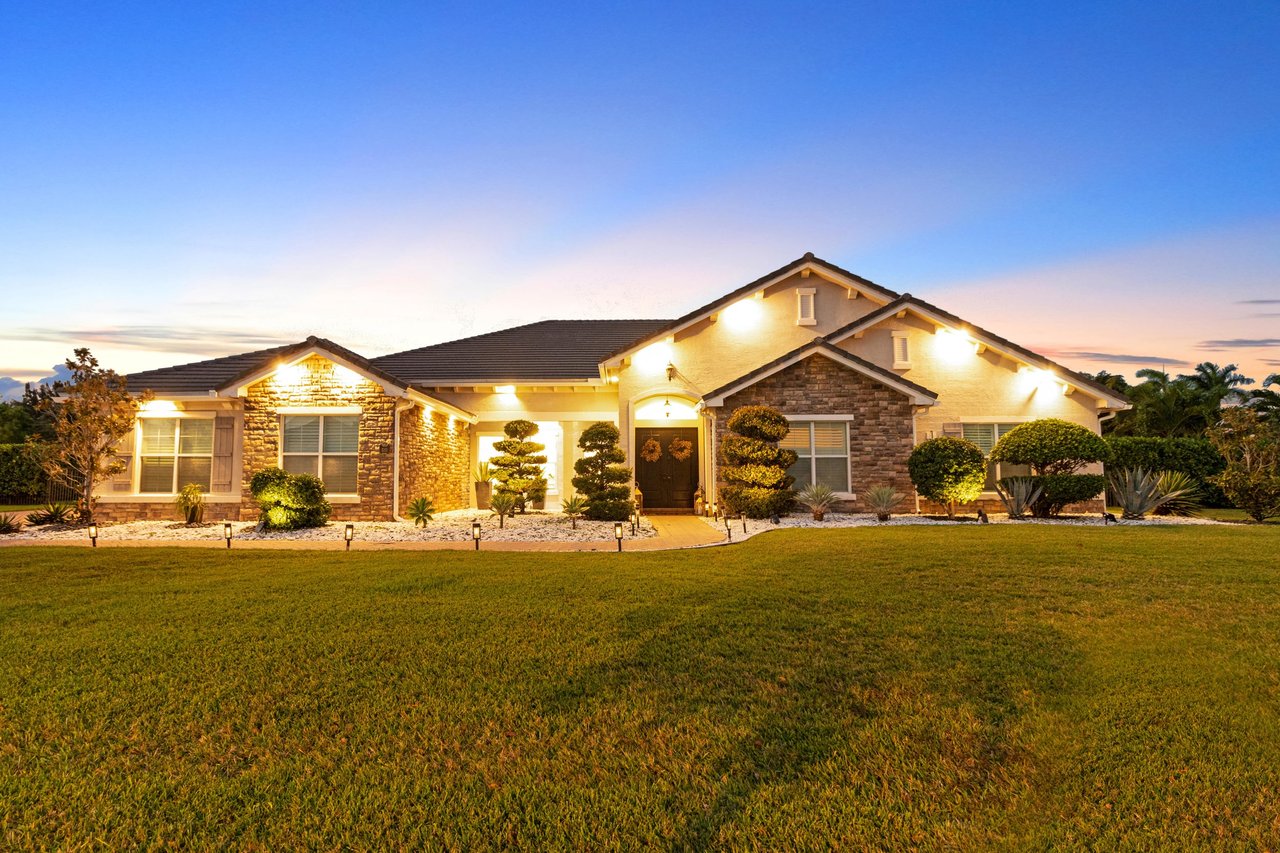
Davie
Preparing for appraisal while making the home's upgrades easy to see in Davie, Florida.

Pompano Beach
Using future-value positioning and targeted marketing to keep buyers engaged as expectations rose in Pompano Beach.
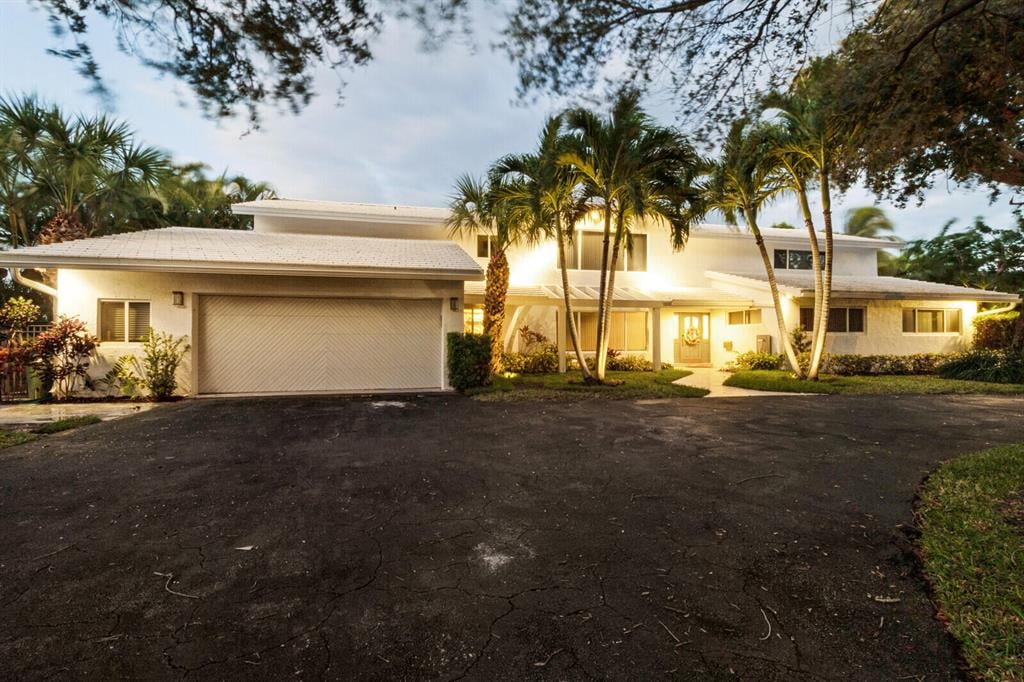
Fort Lauderdale
Giving buyers a credible path beyond the home's biggest objection in Fort Lauderdale.
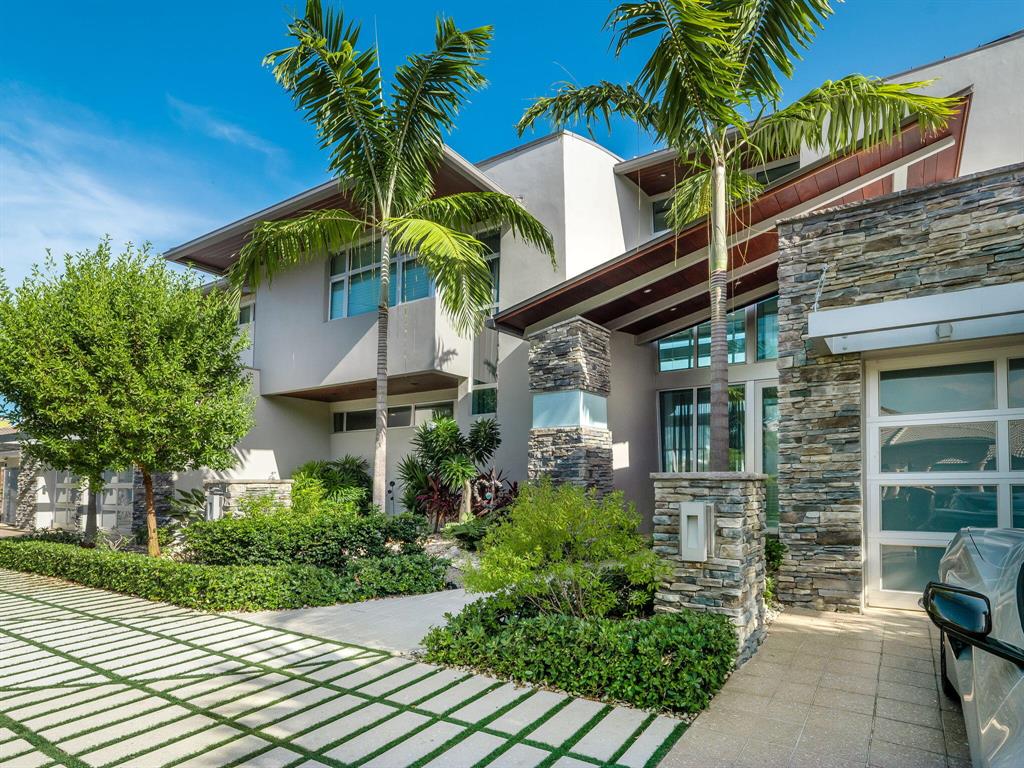
Pompano Beach
Reframing exceptional waterfront value beyond traditional comparables in Pompano Beach, Florida.
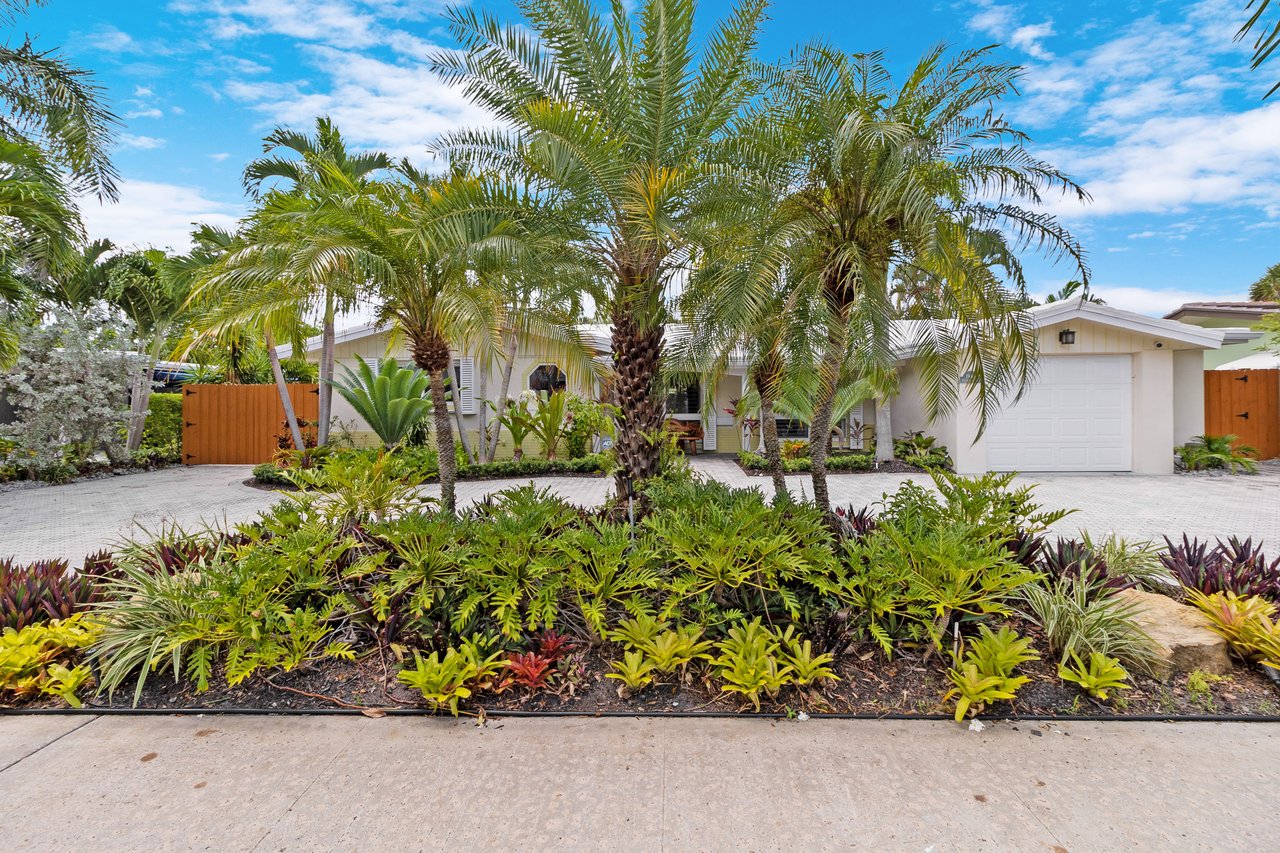
Fort Lauderdale
Replacing a failed first impression with a complete marketing relaunch in Fort Lauderdale, Florida.
Every home is unique. Let's build a customized marketing strategy tailored to your goals to maximize your home's value.